Quick glance at benefits and costs from V2X use cases.
WHAT IS V2X?
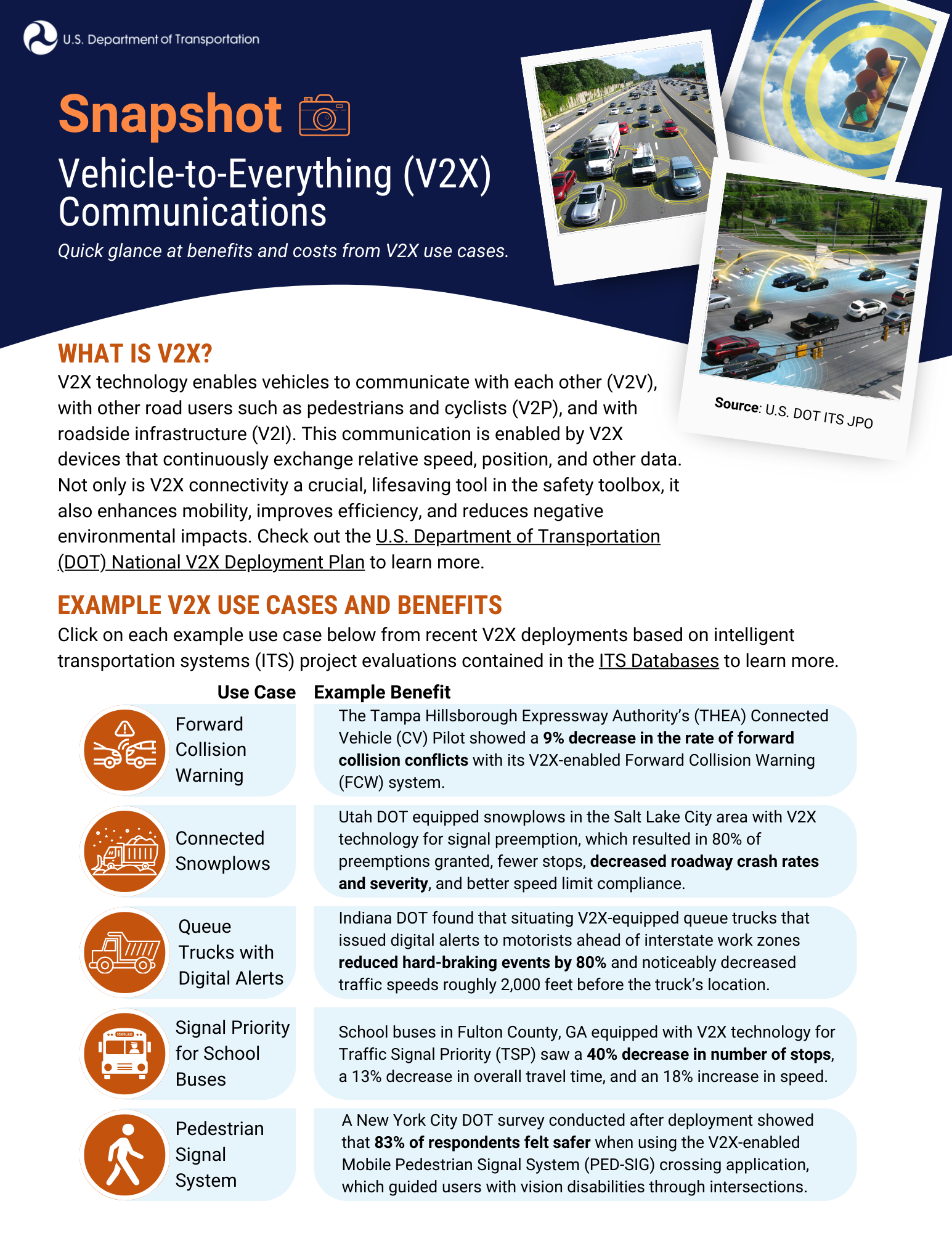
V2X technology enables vehicles to communicate with each other (V2V), with other road users such as pedestrians and cyclists (V2P), and with roadside infrastructure (V2I). This communication is enabled by V2X devices that continuously exchange relative speed, position, and other data. Not only is V2X connectivity a crucial, lifesaving tool in the safety toolbox, it also enhances mobility and improves efficiency. Check out the U.S. Department of Transportation (DOT) National V2X Deployment Plan to learn more.
EXAMPLE V2X USE CASES AND BENEFITS
Click on each example use case below from recent V2X deployments based on intelligent transportation systems (ITS) project evaluations contained in the ITS Databases to learn more.
| Use Case | Example Benefit | |
|---|---|---|
 | Forward Collision Warning | The Tampa Hillsborough Expressway Authority’s (THEA) Connected Vehicle (CV) Pilot showed a 9% decrease in the rate of forward collision conflicts with its V2X-enabled Forward Collision Warning (FCW) system. |
 | Connected Snowplows | Utah DOT equipped snowplows in the Salt Lake City area with V2X technology for signal preemption, which resulted in 80% of preemptions granted, fewer stops, decreased roadway crash rates and severity, and better speed limit compliance. |
 | Queue Trucks with Digital Alerts | Indiana DOT found that situating V2X-equipped queue trucks that issued digital alerts to motorists ahead of interstate work zones reduced hard-braking events by 80% and noticeably decreased traffic speeds roughly 2,000 feet before the truck’s location. |
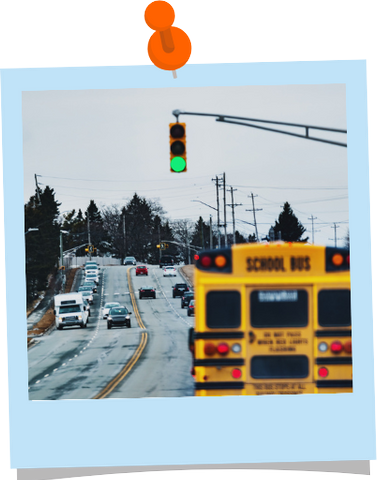
 | Signal Priority for School Buses | School buses in Fulton County, GA equipped with V2X technology for Traffic Signal Priority (TSP) saw a 40% decrease in number of stops, a 13% decrease in overall travel time, and an 18% increase in speed. |
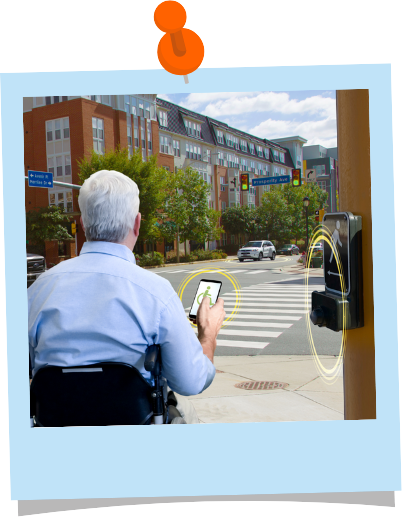
 | Pedestrian Signal System | A New York City DOT survey conducted after deployment showed that 83% of respondents felt safer when using the V2X-enabled Mobile Pedestrian Signal System (PED-SIG) crossing application, which guided users with vision disabilities through intersections. |
Forward Collision Warning
Application Type: V2V
PROBLEM
Morning traffic backs up as commuters approach Lee Roy Selmon Expressway’s Reversible Express Lanes in downtown Tampa, increasing the risk of rear-end crashes.
TECHNOLOGY
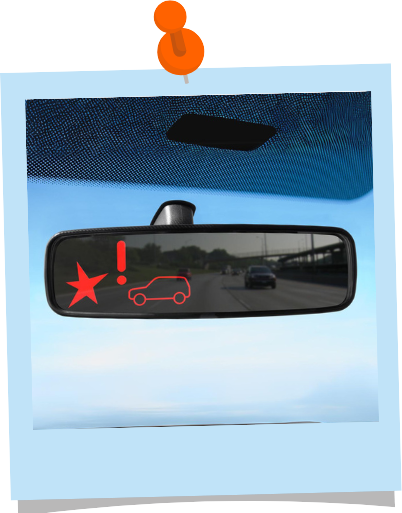
THEA field tested a variety of V2V and V2I technologies during a 19- month pilot in 2018-2020 to support safety and operations, including Forward Collision Warning (FCW) with a Human Machine Interface (HMI). This technology was installed in the rearview mirror and alerts the driver to traffic ahead to help avoid or mitigate the severity of a rear-end crash.
| Overall, findings provide evidence that the deployment contributed to the enhanced mobility and safety of travelers and pedestrians [1]. |
BENEFITS
FCW showed a 9% decrease (4.6 to 4.2) in normalized rates of conflicts per vehicle over time (2021-B01583). Further evaluation is needed as crash analysis often requires longer evaluation periods since crashes are rare events.
Connected Snowplows
Application Type: V2I
PROBLEM
During snow events, the effectiveness of snowplows can be impeded by traffic signal timing and traffic flow. V2X technology can improve efficacy and reduce crash rates on roads.
TECHNOLOGY
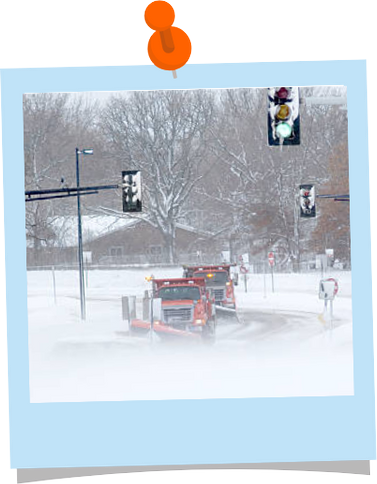
Utah DOT installed signal preemption technology utilizing V2X communications on snowplows and along 5 corridors in the Salt Lake City metro area for a field test during the 2019-2020 winter season to evaluate snowplow effectiveness as well as safety and mobility impacts.
BENEFITS
| Anecdotal evidence from snowplow drivers indicates a benefit to overall operations on corridors equipped with the V2X system [2]. |
Compared to non-equipped routes, V2X-equipped routes experienced a larger reduction in crash rates (3.9 versus 1.8 reduction), a reduction in crash severity for most categories, and a 22% decrease in property damage only crashes. Traffic on V2X-equipped routes traveled at speeds closer to the speed limit than routes not equipped with V2X technology (2023-B01752).

Queue Trucks with Digital Alerts
Application Type: V2I
PROBLEM
Hard-braking events and crashes are all too common near work zones and maintenance areas. V2X technology can be leveraged to better avoid these kinds of dangerous situations.
TECHNOLOGY
In a 26-month pilot from May 2020 to July 2022, Indiana DOT deployed a total of 53 V2X-equipped queue trucks that issued digital alerts ahead of work zones and were transmitted to navigation systems to alert drivers of their presence.
BENEFITS
| These encouraging results support the further deployment of queue trucks and the integration of alerts for enhancing the safety of motorists behind work zone queues [3]. |
In a comparison study with and without equipped queue trucks, Indiana DOT found that queue trucks broadcasting digital alerts gradually decreased traffic speeds from approximately 1,500 to 2,000 feet before the truck’s location and resulted in an approximate 80% decrease in hard-braking events. This decrease in hard-braking events suggests that the queue warning trucks can lower the likelihood of crashes (2023-B01745).
Signal Priority for School Buses
Application Type: V2I
PROBLEM
Frequent stopping of school buses at intersections can lead to inefficient fuel consumption and poor travel time reliability. There is a need to increase fuel efficiency while decreasing travel time, the number of stops, and fuel consumption.
TECHNOLOGY
Two Fulton County School System buses in Georgia were equipped with cellular-V2X (C-V2X) technology in 2022, allowing them to communicate with roadside units at 62 signalized intersections along their routes to receive signal priority.
| The goal of the pilot is to improve safety and mobility for school bus drivers and students as they travel to and from school each day by deploying cutting-edge connected vehicle (CV) technology [4]. |
BENEFITS
Combined results for the two buses in a before-after study showed a 40% decrease in number of stops, a 13% decrease in travel time, and an 18% increase in speed. Each bus also experienced a roughly 7% increase in MPG and over a 7% decrease in fuel consumption (2023-B01804).
Pedestrian Signal System
Application Type: V2P
PROBLEM
Crash fatalities in New York City all too often involve pedestrians. To support its Vision Zero initiative, the New York City DOT aimed to improve safety, mobility, and reliability by reducing the frequency and severity of vehicle and pedestrian crashes, injuries, and fatalities.
TECHNOLOGY
PED-SIG, a custom smartphone application that provides real-time signalized intersection information, was field-tested with 24 participants with vision disabilities in November 2021 to assess its impact on safety and pedestrian confidence.
| All the participants anticipated that pedestrians would benefit from the use of PED-SIG technologies, especially pedestrians with vision disabilities [5]. |
BENEFITS
83% of pedestrian participants felt safer when using the PED-SIG application compared to not using it. In the overall New York City CV pilot deployment, 38% of drivers reported that the CV alerts helped them drive more safely (2022-B01650).
POTENTIAL V2X COST CATEGORIES
Infrastructure Technologies
| Communications Backbone/Backhaul
|
Vehicle Technologies
| Other
|
DOT EXAMPLE: V2X PROJECT COSTS
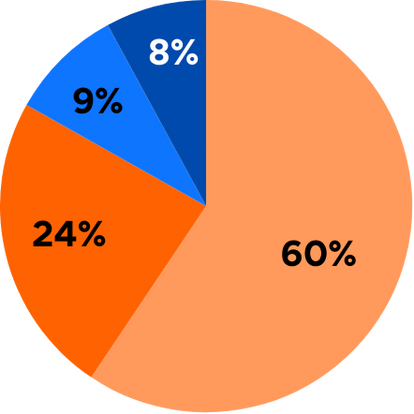
Maryland DOT (MDOT) piloted a dual mode DSRC/C-V2X infrastructure-to-vehicle (I2V) pedestrian system at one intersection along MD214 highway in Seat Pleasant from 2019-2021 to evaluate crosswalk safety. See the rounded project cost breakdown at right.
Rounded Cost Breakdown of Maryland DOT's Dual Mode I2V Pedestrian System Total Project Cost est. $84K (2023-SC00542)
|


REFERENCES
S. Concas, A. Kourtellis, M. Kamrani, O. Dokur, University of South Florida. Center for Urban Transportation Research, and Tampa Hillsborough Expressway Authority, “Connected Vehicle Pilot Deployment Program Performance Measurement and Evaluation– Tampa (THEA) CV Pilot Phase 3 Evaluation Report,” FHWA-JPO-20-829, Mar. 2021. Accessed: May 08, 2024. [Online]. Available: https://rosap.ntl.bts.gov/view/dot/55818
G. G. Schultz, S. K. Lau, M. Shoaf, D. Bassett, D. L. Eggett, and Brigham Young University. Department of Civil and Construction Engineering, “Analysis of Using V2X DSRC-Equipped Snowplows To Request Signal Preemption,” UT-22.14, Jul. 2022. Accessed: May 08, 2024. [Online]. Available: https://rosap.ntl.bts.gov/view/dot/63156
R. S. Sakhare et al., “Impacts to Traffic Behaviour From Queue Warning Truck: Current Pilot Project,” FHWA/IN/JTRP-2022/26, Oct. 2022. doi: 10.5703/1288284317448.
AppInfo Inc., "School Bus Priority Pilot Overview," AppInfo Inc., October 2022. Accessed on: May 8, 2024. [Online]. Available: https://appinfoinc.com/wp-content/uploads/2022/10/school-bus-priority-pilot-overview.pdf
K. Ozbay et al., “Connected Vehicle Pilot Deployment Program Phase 3, PED-SIG – New York City Department of Transportation (NYCDOT),” FHWA-JPO-22-921, Dec. 2021. Accessed: May 08, 2024. [Online]. Available: https://rosap.ntl.bts.gov/view/dot/63614