2025 Executive Briefing
BRIEFING HIGHLIGHTS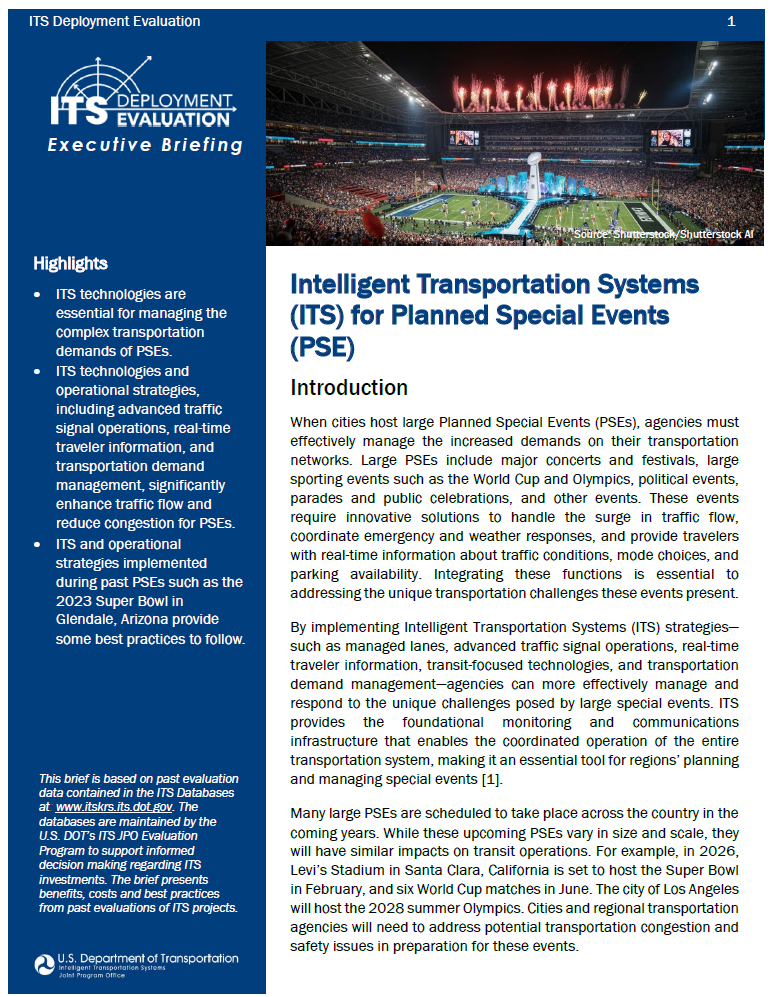
- ITS technologies are essential for managing the complex transportation demands of PSEs.
- ITS technologies and operational strategies, including advanced traffic signal operations, real-time traveler information, and transportation demand management, significantly enhance traffic flow and reduce congestion for PSEs.
- ITS and operational strategies implemented during past PSEs such as the 2023 Super Bowl in Glendale, Arizona provide some best practices to follow.
Introduction
When cities host large Planned Special Events (PSEs), agencies must effectively manage the increased demands on their transportation networks. Large PSEs include major concerts and festivals, large
sporting events such as the World Cup and Olympics, political events, parades and public celebrations, and other events. These events require innovative solutions to handle the surge in traffic flow, coordinate emergency and weather responses, and provide travelers with real-time information about traffic conditions, mode choices, and parking availability. Integrating these functions is essential to addressing the unique transportation challenges these events present.
By implementing Intelligent Transportation Systems (ITS) strategies—such as managed lanes, advanced traffic signal operations, real-time traveler information, transit-focused technologies, and transportation demand management—agencies can more effectively manage and respond to the unique challenges posed by large special events. ITS provides the foundational monitoring and communications infrastructure that enables the coordinated operation of the entire transportation system, making it an essential tool for regions’ planning and managing special events [1].
Many large PSEs are scheduled to take place across the country in the coming years. While these upcoming PSEs vary in size and scale, they will have similar impacts on transit operations. For example, in 2026, Levi’s Stadium in Santa Clara, California is set to host the Super Bowl in February, and six World Cup matches in June. The city of Los Angeles will host the 2028 summer Olympics. Cities and regional transportation agencies will need to address potential transportation congestion and safety issues in preparation for these events.
Benefits
ITS implementations can offer substantial benefits to agencies planning PSEs, improving safety and creating smoother traffic flow. Leveraging technologies and strategies such as advanced traffic signal operations, advanced traveler information systems (ATIS), and transportation demand management (TDM) can profoundly enhance event transportation operations and management.
Advanced Traffic Signal Operations: Special events present unique challenges in traffic management, requiring efficient lane utilization, prioritization of specific modes of transportation, and dynamic adjustments to traffic signals. To address these demands, monitoring traffic conditions and making real-time adjustments to traffic signal timing can improve traffic flow and reduce congestion. Traffic management strategies, such as innovative signal retiming and the implementation of dedicated Olympic lanes during the 2012 London Olympics, were instrumental in mitigating potential congestion from planned bike race road closures (2023-B01762).
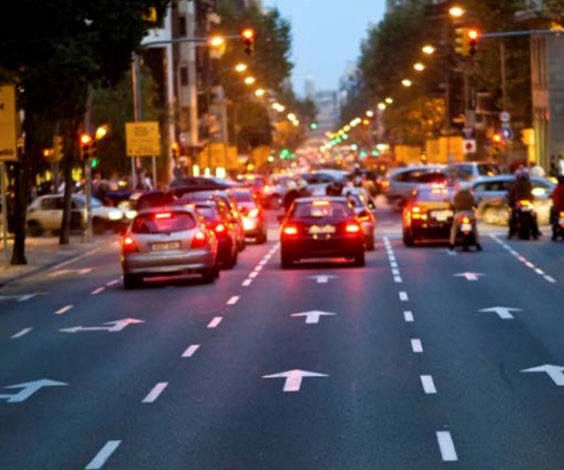
Another study near a baseball stadium in Fort Myers, Florida, from 2012 to 2016, illustrates the effectiveness of these strategies. Signal retiming was implemented to improve traffic conditions during baseball games, effectively reducing average travel time on arterial roads by over 40 percent for traffic entering the events. Signal adjustments in 2016 notably cut travel times for eastbound traffic, demonstrating significant improvements in traffic flow and reductions in delays (2023-B01766).
Finally, an adaptive signal control technology pilot program implemented in Arizona resulted in up to $25,900 weekday and $9,500 weekend cost savings, and up to 51 percent weekday and 43 percent weekend travel time savings (2021-B01549).
Informed Mode Change: Large scale events can overwhelm preexisting transportation infrastructure and networks that are not designed to handle the amount of traffic associated with the event. Informed mode changes can alleviate this pressure by adding new public transit routes or by increasing the frequency of service for public transit during major events. For the 2024 Taylor Swift Eras Tour, New Jersey Transit notified travelers of extra service and additional routes that were added to meet the demands of the event and to encourage visitors to take public transit over driving (2025-B01970). This strategy saw a decrease of 19 percent for the total vehicle hours of delay (VHD) for the MetLife Stadium concert in New Jersey, which was the only concert venue to experience a decrease in VHD [2]. Travelers were encouraged to download the NJTRANSIT mobile app to receive service alert notifications with real time updates [3].
Transportation Demand Management and Transit Operations: TDM strategies are essential for efficiently managing traffic demand and alleviating congestion. During the 2020 Tokyo Olympics, TDM measures such as telework and flexible commuting hours, and discounted late-night tolls were implemented to remarkable effect through significant cooperation among Olympic committee, business industries, and the Tokyo Metropolitan Government. These strategies reduced vehicle flow by 10 percent and cut delays by an impressive 80 percent (2023-B01756). Furthermore, dedicated buses and shuttles also provided safe, smooth, and reliable transportation services for athletes and stakeholders by leveraging digital technology. By enhancing overall transportation network efficiency, these measures ensured smoother travel during the event. Congestion pricing, a key TDM strategy, adjusts toll rates based on current traffic conditions to encourage off-peak travel and alternative routes.
This approach is under consideration for the 2028 Olympic Games in Los Angeles, where it could potentially generate between $12 billion and $104 billion in revenue, which would be used to improve public transit and support sustainability initiatives (2023-B01772). Additionally, Los Angeles can take advantage of the increased telework capabilities and acceptance adopted during the COVID-19 pandemic, encouraging employers to promote telework during the event to further reduce congestion and ease pressure on the transportation network.
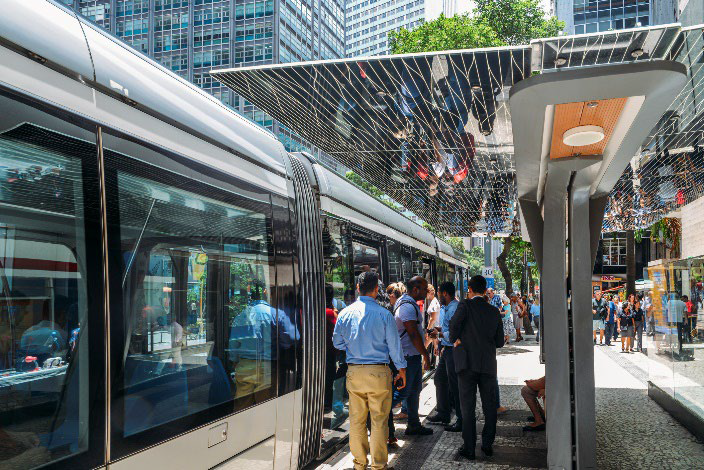
During major events like the Olympics, traffic disruptions can be significantly mitigated using information technologies to encourage travelers to switch from private vehicles to public transit. A study evaluated an informed mode change strategy implemented during the 2016 Summer Olympics in Rio de Janeiro by analyzing data from mobile phones, navigation apps, and other sources to forecast traffic surges and select trips that could be shifted to public transit. The strategy targeted specific travelers whose mode change would yield the greatest collective travel time savings. The findings showed that this informed approach was five times more effective than a uniform strategy, reducing collective travel time by over 10 percent and increasing traffic speeds by 7.7 percent (2023-B01769).
Transit Signal Priority (TSP) significantly enhances the efficiency of public transit systems by prioritizing buses and other transit vehicles at traffic signals. This technology helps reduce delays and increases service reliability, making public transportation a more appealing option for event attendees. The increased efficiency gained with TSP is especially important during PSEs, as the PSE increases passenger demand for public transit. In Salt Lake City, GPS-enabled TSP systems used for Bus Rapid Transit (BRT) achieved a noteworthy reduction in transit travel time by approximately 9 percent, while maintaining minimal impact on non-transit traffic, which experienced only a 1 percent increase in travel time along the corridor (2018-B01326). The findings highlighted the flexibility of TSP systems, showing that conditional TSP could effectively mitigate side-street traffic delays, demonstrating the superior adaptability and effectiveness of advanced TSP methods.
| Paris expanded its micromobility network for the 2024 Olympics with 30,000 shared bikes, 20,000 new cycle spaces, and 34 miles of new bike lanes. This supported an expected 10 percent of visitors traveling by bike. |
Micromobility: Micromobility provides travelers with another alternative to driving and taking public transit, which can help alleviate even more pressure put on a transportation network from a planned special event. In preparation for the 2024 Olympic Games, Paris added 30,000 shared bikes, 20,000 new cycle spaces, and 34 miles of bike lanes, boosting daily bike trips to support an expected 10 percent of Olympic visitors using bikes to visit 35 venues (2024-B01906).
By harnessing these innovative ITS technologies and strategies, transportation agencies can achieve improved, smoother traffic flow, and reduced congestion, all while ensuring a superior experience for attendees and residents during special events.
Costs
Since there are numerous ITS solutions available for traffic management during PSEs, overall costs can vary significantly depending on the specific applications and technologies selected. Transportation agencies should anticipate large investments, often in the millions of dollars, and conduct thorough cost-benefit analyses before making permanent decisions or deployments. Along with direct expenses, agencies must also account for the substantial costs of coordination and collaboration across regional agencies, including meeting attendance, follow-up, and overall coordination efforts. Effective collaboration is essential for ensuring smooth operations during such events. Previous costs of ITS technologies for these events are detailed below.
During the 2012 London Olympics, Transport for London (TfL) invested $1.92 million in 200 solar-powered portable dynamic message signs (DMS) provided by an Australian traffic management company. These DMS, equipped with advanced color display technology and web-based programming, were crucial for managing increased traffic demand and congestion. They offered real-time information on road conditions and the Olympic route network, helping travelers with directional and security advice (2023-SC00535). Similarly, a Michigan study reported that the installation of 277 DMS units cost $72,000, with an annual operation cost of $2,300 and a service life of 15 years. Additionally, portable DMS in Michigan had a one-time cost of $6,950, including installation and maintenance (2023-SC00540). These examples underscore the importance of planning agencies accounting for the size of PSEs and network routes to determine the number of signs and associated costs required for effective management.
The Utah Department of Transportation (UDOT) deployed a connected vehicle (CV) corridor along Redmond Road in Salt Lake City, to support TSP controls. The project involved installing CV technology at 24 of 30 signalized intersections and equipping transit vehicles with onboard communication devices, costing $575,900. This deployment aimed to enhance signal coordination and optimize traffic flow by leveraging CV technology. The project included a benefit-cost analysis and the development of a microscopic simulation to evaluate the proposed signal control system's effects (2021-SC00495). Beyond improving daily transit operations, the CV-enabled TSP system provides a valuable framework for managing traffic during PSEs, when surges in travel demand and irregular traffic patterns can degrade transit reliability. This corridor could play a pivotal role in supporting mobility and transit performance during the 2034 Salt Lake City Winter Olympics, when efficient multimodal coordination, transit priority, and event-driven signal optimization will be essential to accommodate high volumes of visitors and athletes.
Best Practices
To ensure effective management of transportation systems during major events, it is crucial to adopt best practices that address regional transport needs, integrate advanced technologies, and implement strategic planning. This approach should also prioritize safety by enhancing safety measures and reducing congestion through coordinated efforts and stakeholder engagement. Lessons from the WC26 Mobility and Operations Peer Exchange Report highlight the importance of scenario-based planning, multi-agency coordination, and TDM strategies to anticipate disruptions and maintain smooth operations (2025-L01263). Engaging the community and leveraging data-driven decision-making are also critical for improving outcomes and ensuring post-event evaluations inform future planning.
| Coordinated, scenario-based planning and multi-agency collaboration are essential for maintaining smooth operations and safety during major events. |
Enhancing Regional Transport for Mega Events
When hosting a mega event across multiple cities or a macroregional area, such as the Los Angeles 2028 Summer Games, focusing on interurban transport performance is crucial. Strengthening territorial interconnectivity, enhancing intermodal efficiency, and improving public transport for medium and long distances can foster a modal shift and manage increased demand. Mobility planning should align with long-term strategic goals to address safety and sustainability. Ensuring resilience to adverse weather conditions, leveraging technological innovations like automated shuttles to curb first-and-last-mile problem, and implementing real-time information systems will enhance both safety and efficiency, while minimizing congestion (2023-L01187). Lessons from WC26 report show that coordinated multi-agency command posts, contingency planning for weather and security, and TDM strategies are highly effective in mega-event contexts (2025-L01263, 2025-L01264).
Integrating Corridor Management
Effective ICM can significantly improve traffic flow and mobility, especially in major corridors such as those in the U.S. facing high travel demand, incidents, or severe weather. Demonstrating ICM’s benefits through its impact on travel time reliability and predictability is essential for gaining support. ICM is most valuable in challenging conditions and should manage corridors as a whole, rather than focusing on individual stakeholder assets and priorities. Engaging a broad coalition of stakeholders and educating the public about ICM can help overcome resistance and ensure long-term financial sustainability (2023-L01173).
Real-Time Transit Information Delivery
For high-demand events such as the Taylor Swift Eras Tour, integrating real-time data into event apps and local transit platforms ensures travelers have access to crowd-aware routing and last-mile connectivity solutions. For example, the NFL required fans to download the NFL OnePass app to gain free access to the 2024 NFL Draft in Detroit. On top of providing entry to the event, the app also provided valuable transit information such as maps of the event and how to get around town during the draft [4]. These strategies can also support large-scale planned events, such as the 2034 Winter Olympics in Salt Lake City, Utah, where demand-responsive transit services and real-time updates are critical for managing passenger flow. By providing accurate, user-friendly, and accessible information, transit agencies can improve travel times, increase rider satisfaction, and encourage greater use of public transportation. (2025-L01254). Lessons from WC26 report reinforce the value of mobile application integration, crowd management strategies, and data-driven real-time updates to improve travel times, enhance rider satisfaction, and encourage public transportation use (2025-L01263).
Success Story
The 2023 Super Bowl in Glendale, Arizona offers a compelling example of how ITS was used to support the United States’ biggest sports logistical operation of the year. Approximately 300,000 people traveled to downtown Phoenix to attend the Super Bowl Experience at the Phoenix Convention Center throughout the week, with 250,000 of those people electing to use the Valley Metro light rail [5]. The event generated $1.3 billion in total economic impact, with $726.1 million going directly to Arizona’s gross domestic product (GDP) [6].
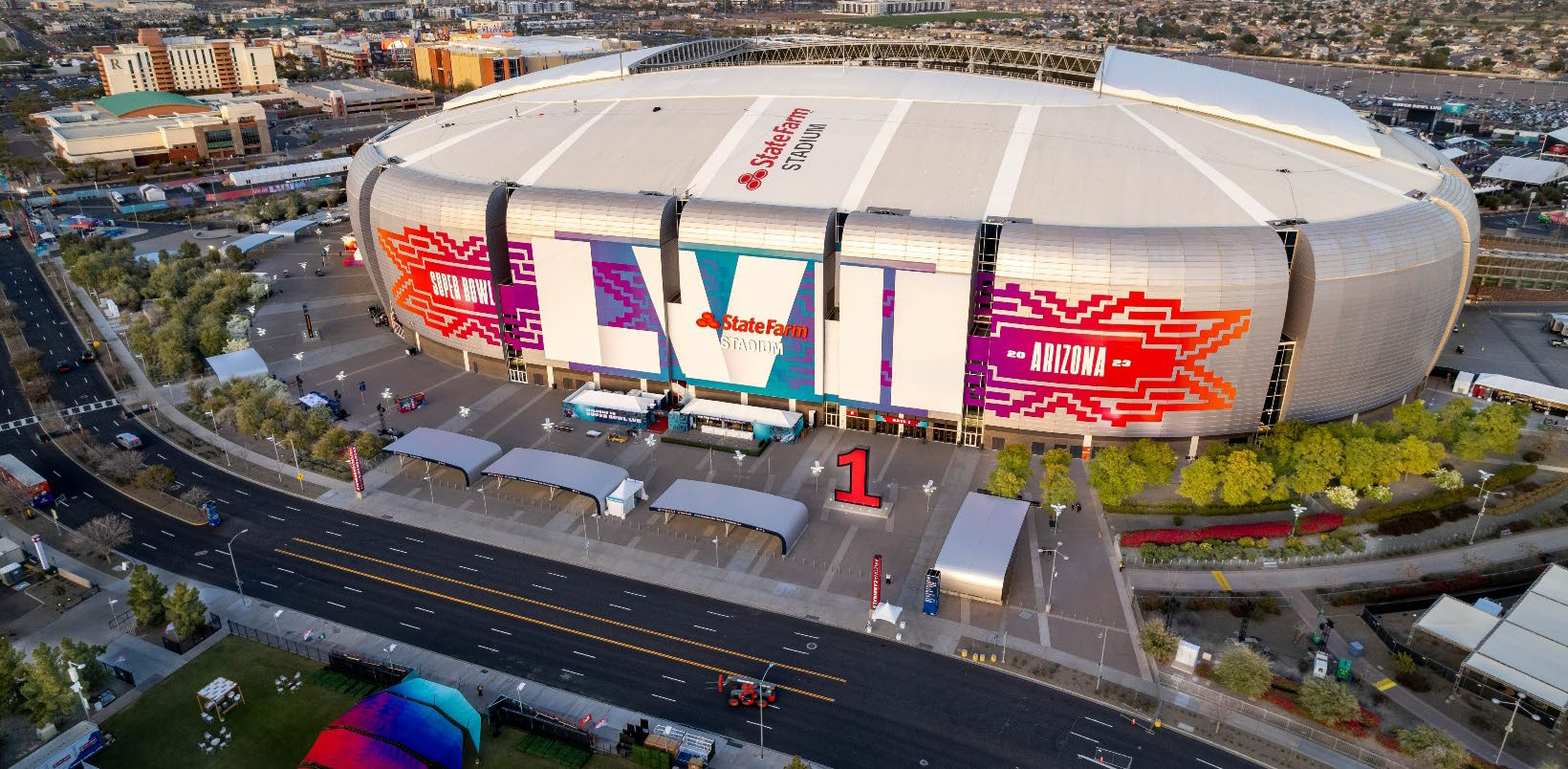
Arizona Department of Transportation (ADOT) worked in coordination with other local transportation agencies to implement new transportation strategies to alleviate traffic congestion during the event, including the installation of several new ITS technologies. Adaptive signal control systems were installed at 15 key intersections near State Farm Stadium, which track traffic flow and adjust signal timing to meet traffic demand [7]. ADOT also invested $6.4 million to install 21 new high-definition (HD) Closed-Circuit Television (CCTV) cameras, upgrade 13 CCTV cameras, and install 9 dynamic message signs on a 22 mile stretch of Loop 21 in Phoenix [8]. These cameras were used to track traffic flow during the event and provide data that helped reroute travelers to the most efficient route using the dynamic message signs.
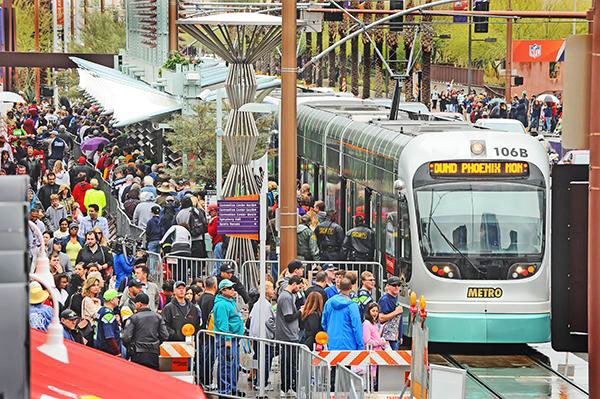
In addition to alleviating road traffic, ADOT employed multiple strategies to improve public transit and encourage fans to use it when attending events during Super Bowl weekend. Valley Metro extended light rail service hours from 11 pm to 2 am [9] and nearly doubled the fleet size from 30 trains to 59 trains to accommodate for the increase in passengers for Super Bowl related events [10]. To encourage the use of public transit, Valley Metro in partnerships with other organizations, such as Downtown Phoenix, Inc., were able to provide free light rail fares to fans with tickets to Super Bowl related events.
ADOT also implemented strategies to better communicate transportation options to fans attending events. Posters were installed across the city to help direct fans to light rail stations, parking lots, and other major downtown destinations. Fans were also encouraged to download the Valley Metro App. The app provided fans with real time alerts, route planning, and fare purchasing functionality which helped streamline the process of taking the light rail to Super Bowl events [11].
The ITS technologies and strategies implemented for the Super Bowl were highly effective with the following results:
- Travel times for major events like the Super Bowl can be reduced by up to 50 percent when implementing adaptive signal control (2025-B01953).
- Valley Metro rail saw an increase in light rail usage up to 250,000 passengers during the week of the Super Bowl, a 40 percent increase from average weekly passengers [11].
- The Valley Metro app was downloaded 5,300 times, and 4,400 digital passes were sold during the four days of super bowl weekend, an increase from the 350 average daily downloads.
These efforts were the result of planning years in advance as well as the testing of routes, ITS applications, and various transportation management strategies prior to the events. PSEs benefit greatly from intense planning, adequate testing, and high-level coordination. The 2023 Super Bowl in Arizona showed that with adequate investment, planning, and coordination, ITS can facilitate positive experiences with the transportation system of host cities and reflect positively on the international community. As the United States prepares to host several international events, transportation agencies should aim to get a head start on considering which strategies best fit the needs of the events, necessary infrastructure changes, budget size, and collaboration efforts.
References
United States. Joint Program Office for Intelligent Transportation Systems and United States. Federal Highway Administration. Office of Operations, Eds., “Intelligent transportation systems for planned special events: a cross-cutting study,” ROSA P, Nov. 01, 2008. https://rosap.ntl.bts.gov/view/dot/3255 (accessed August 7, 2024).
“How One city used transit to cut traffic during a Taylor Swift Mega-Concert - Streetsblog USA,” Streetsblog USA, https://usa.streetsblog.org/2023/08/16/how-one-city-used-transit-to-cut-traffic-during-a-taylor-swift-mega-concert (accessed May 22, 2025).
“NJ Transit offers rail service to upcoming METLIFE Stadium Concerts: Taylor Swift, Ed Sheeran, Morgan Wallen,” NJ TRANSIT, https://www.njtransit.com/press-releases/nj-transit-offers-rail-service-upcoming-metlife-stadium-concerts-taylor-swift-ed (accessed May 22, 2025).
C. Hall, “The OnePass app is your ticket to the 2024 NFL draft in Detroit: What to know,” USA Today, https://theramswire.usatoday.com/story/sports/nfl/lions/2024/04/18/nfl-onepass-app-draft-detroit-2024-guide-ticket-theater/73348136007/?utm_source=chatgpt.com (accessed Sep. 10, 2025).
“Valley Metro Rail serves 250K riders during Super Bowl LVII,” Valley Metro, https://www.valleymetro.org/news/2023/02/valley-metro-rail-serves-250k-riders-during-super-bowl-lvii (accessed Jan. 30, 2026).
J. McHugh, “Super Bowl Economic Impact Numbers released,” The Glendale Star, https://www.glendalestar.com/news/article_50577b98-6931-11ee-b14d-5396ec269e7e.html (accessed Jun. 2, 2025).
W. Clark, “New technology installed in Glendale to ease Super Bowl Traffic,” https://www.azfamily.com/2023/02/08/new-technology-installed-glendale-ease-super-bowl-traffic/ (accessed Jun. 2, 2025).
“ADOT completes freeway technology system along West Valley Loop 101 in time for Super Bowl,” ADOT completes freeway technology system along West Valley Loop 101 in time for Super Bowl | Department of Transportation, https://azdot.gov/news/adot-completes-freeway-technology-system-along-west-valley-loop-101-time-super-bowl (accessed Jun. 2, 2025).
M. Hammond, “Valley Metro extends light rail hours to 2 a.m. for Super Bowl Weekend,” KTAR.com, https://ktar.com/arizona-news/valley-metro-extends-light-rail-hours-to-2-a-m-for-super-bowl-weekend/5428948/ (accessed Jun. 24, 2025).
M. Thompson, “Brand new trains hit the light rail line ahead of Super Bowl Weekend,” ABC15 Arizona in Phoenix (KNXV),
https://www.abc15.com/news/operation-safe-roads/brand-new-trains-hit-the-light-rail-line-ahead-of-super-bowl-weekend (accessed Jun. 24, 2025).“Valley Metro 2023 Super Bowl Recap”, https://www.aptagateway.com/eweb/fileviewer.aspx?itemkey=00000000-0000-0000-0000-000000000000&objectName=client_apta_upload&file=2300295851-23superbowlrecap-final-37bd1871.pdf (accessed Jun. 24, 2025).