Quick glance at benefits and costs from rural ITS deployments around the United States.
WHAT ARE RURAL ITS DEPLOYMENTS?
Transportation systems in rural areas face unique challenges. While
encompassing 97% of the total land area in the United States, only 19% of the nation’s population lives in rural areas [1]. Rural areas refer to geographical areas outside of metropolitan and micropolitan areas. Despite small populations, 68% of the total lane-miles in the transportation network and 43% of all highway fatalities in the United States are in rural areas [2]. These characteristics underscore the need for innovative solutions to improve rural transportation safety and efficiency. Intelligent Transportation Systems (ITS) provides opportunities for such improvements.
EXAMPLE RURAL ITS USE CASES AND BENEFITS
Click on each example use case below from recent rural ITS deployments based on ITS project evaluations contained in the ITS Databases to learn more.
| Use Case | Example Benefit | |
|---|---|---|
 | Rural Pedestrian Crossings | Rectangular Rapid Flashing Beacons (RRFB) installed at rural crosswalks in Vermont led to an increase in driver yield rates of up to 43%. |
 | Curve Speed Warning System | Drivers using an in-vehicle curve-speed warning system with audio and visual alerts approached horizontal curves 8% to 10% more slowly than when not using the system at a test site in Minnesota. |
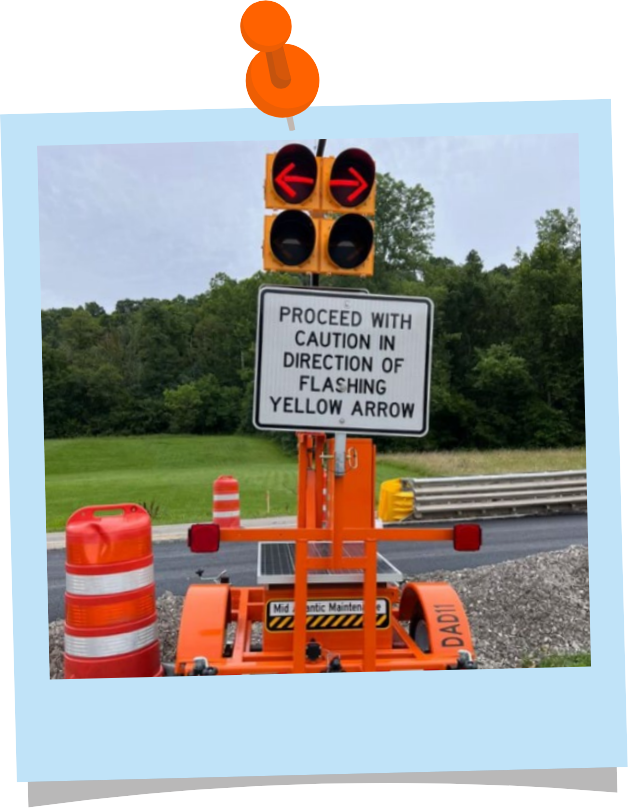
 | Driveway Assistance Device | Driveway assistance devices (DAD) enabling motorists at driveways to join existing queues in signalized work zones in rural Ohio reduced driveway waiting time by 46% and reduced vehicle speeds by 28% compared to temporary traffic signals. |
 | Animal Detection System | The Idaho Transportation Department deployed a doppler radar-based animal detection system that alerts drivers to the presence of animals on a rural two-lane road; vehicle speeds decreased by 0.7 to 4.4 miles per hour (mph) while the system was activated. |
 | Automated Bridge Deck Warning | The Michigan Department of Transportation (DOT) deployed an Automated Bridge Deck Warning System (ABDWS) using non-invasive sensors on I-75 in Otsego County and observed a 35% reduction in the total number of crashes in icy, snowy, and slushy conditions. |
Rural Pedestrian Crossings
PROBLEM
Pedestrians are especially vulnerable to collisions with vehicles when crossing roadways in high-risk areas, such as high speed and low pedestrian volume rural roads and between intersections where drivers may not expect pedestrians.
TECHNOLOGY
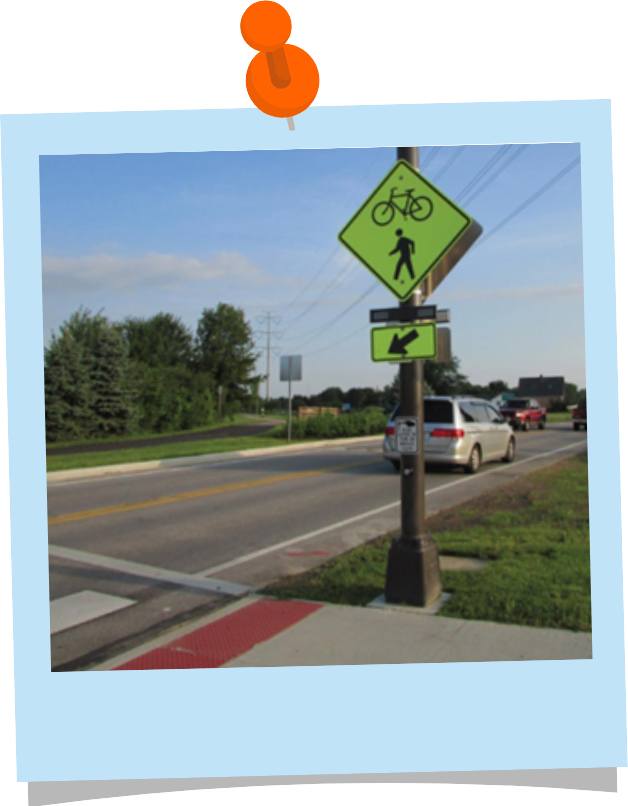
RRFBs use a pair of pedestrian-activated rectangular flashing lights with a crosswalk warning sign. RRFBs are placed under the pedestrian crossing sign on both sides of a crosswalk.
BENEFITS
| “RRFBs may improve pedestrian wait times, the rate at which vehicles stop suddenly, and the rate at which pedestrians step into the roadway before drivers yield [3].” |
Across six rural sites in Vermont, a difference-in-difference analysis showed that deployment of RRFBs improved driver yield rates by 12% to 43%. Multivariate analysis found that when RRFBs were active, drivers were 2.59 times more likely to yield to pedestrians (2023-B01776).
In-Vehicle Curve Speed Warning System
PROBLEM
Lane-departure crashes at horizontal curves represent a significant portion of fatal crashes on rural roads, so solutions are needed to aid drivers in identifying upcoming curves and to inform them of safe speeds to navigate the curve.
TECHNOLOGY
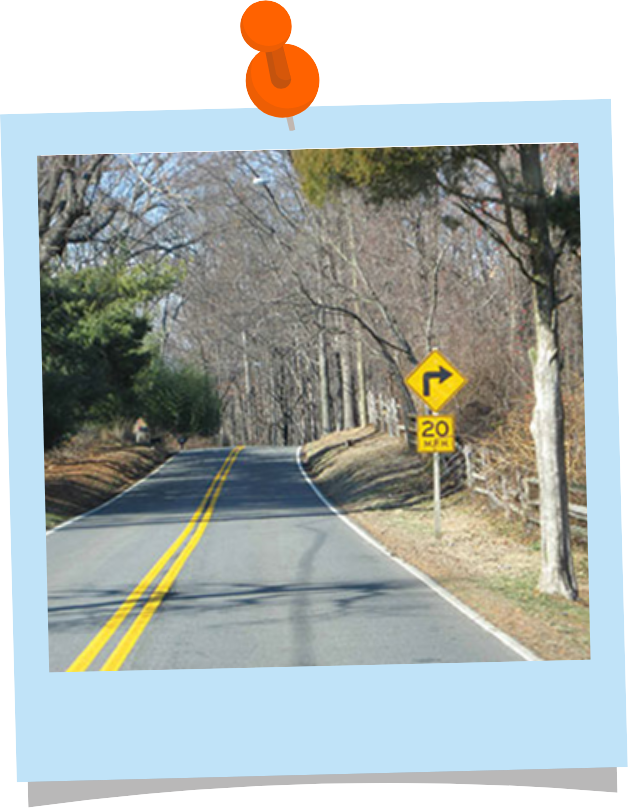
An in-vehicle dynamic curve-speed warning system with audio and visual alerts was deployed in a controlled pilot study as a mobile phone application that delivered timely and non-distracting warnings to drivers at the Minnesota Highway Safety and Research Center in St. Cloud.
| “An in-vehicle curve-speed warning system deployed as a smartphone app is a feasible method for delivering critical curve-related information to drivers [4].” |
BENEFITS
Drivers approached horizontal curves 8% to 10% slower than when not using the app. Participants rated the system as a 4.52 out of 5 when asked if the system made them feel safer when driving in rural, curvy areas and 4.5 out of 5 for willingness to recommend the system to others (2021-B01694).
Driveway Assistance Device
PROBLEM
Some work zones require one-way travel along a two-way corridor. However, controlling traffic at driveways and low volume intersecting roads in these one-way travel areas is a challenge. Temporary traffic signals are an option but can cause extensive delays.
TECHNOLOGY
In work zones, DADs allow motorists at driveways and low volume intersecting roads to join an existing queue of vehicles in the mainline in the same one-way direction of travel, rather than calling for an additional phase at a temporary traffic signal for those movements.
BENEFITS
| “The benefit-to-cost ratio for the DAD devices is over 153:1. There is substantial benefit and minimal costs associated with the utilization of the devices [5].” |
At a deployment in rural Muskingum County, Ohio, DADs reduced driveway waiting time by 46% and reduced mainline queue lengths by 32% compared to temporary traffic signals. The compliance rate was also higher for DADs (80%) compared to temporary traffic signals (22.7%) (2023-B01781).
Radar-Based Animal Detection System
PROBLEM
The total number of deer-vehicle collisions is estimated between 1 and 2 million per year and increasing [6]. These collisions lead to property damage, human injuries and fatalities, and animal injuries and fatalities.
TECHNOLOGY
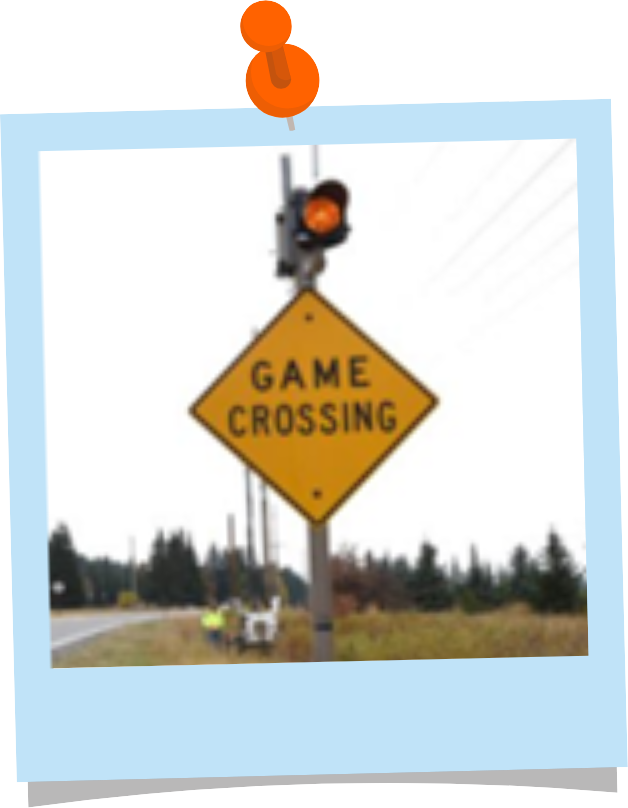
The Idaho Transportation Department installed a doppler radar-based animal detection system with thermal cameras on a rural two-lane road. The system alerts drivers to the presence of animals with a flashing light placed above warning signs north and south of the detection zone.
BENEFITS
| “For 75% of the deer [on the pavement], the warning signs were “on” the entire time the deer was on the pavement, and for elk, this was 100% [6].” |
Vehicle speeds decreased by 0.7 to 4.4 mph while warning signs were activated. The radar-based system correctly detected 76% of animal crossing events. Most deer were detected early enough for drivers to respond to the warning, 68% (northbound) and 85% (southbound) (2021- B01581).
Automated Bridge Deck Warning System
PROBLEM
Winter weather can cause unsafe situations for drivers due to variations in type and severity of adverse conditions within an area. Hyper-local variations in weather may present drivers with unexpected conditions.
TECHNOLOGY
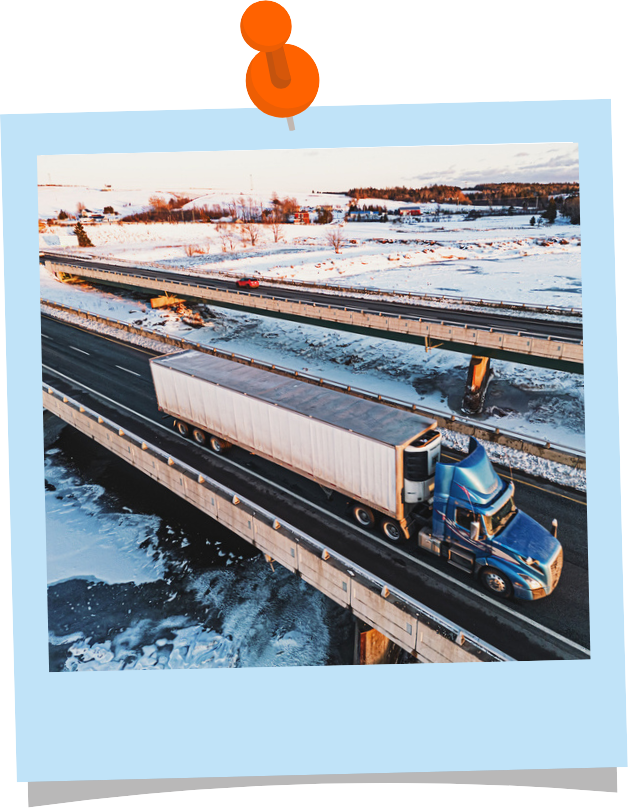
The Michigan Department of Transportation deployed an ABDWS using non-invasive sensors to ensure better maintenance and accuracy of alerts. The sensors detect moisture and temperature settings and use existing ESS when possible.
BENEFITS
| “Michigan DOT personnel have frequently observed drivers slowing to a safer speed when the warnings are activated [7].” |
Since deployment on I-75 in Otsego County, the bridge has seen a 35% reduction in crashes under icy, snowy, and slushy conditions. The site has also noted a reduction in crash severity, noting no fatal or serious crashes between the time of installation and evaluation (2024-B01854).
SAMPLE RURAL ITS DEPLOYMENT COSTS
| The Vermont Agency of Transportation deployed RRFBs to enhance the visibility of uncontrolled marked crosswalks. RRFBs consist of a pair of pushbutton-activated beacons supplementing signs at a marked crosswalk and require power through a hard-wired connection or solar assembly. Typical cost per crosswalk was $10,000 (2024-SC00554). | $10,000 per RRFB |
$60,000 | In Idaho, a doppler radar-based animal detection system with continuous coverage is estimated to cost about $60,000 per 250 meters (820 feet) and requires replacement every 10 years. The system requires regular maintenance and calibration, costing an additional $3,000 per 250 meters annually (2021-SC00486). |
| DADs help motorists at driveways join queues traveling in the same direction in a work zone. For a 9-month deployment in Ohio, capital costs for DADs in one-lane, two-way work zones were estimated to be $16,200 and maintenance costs were estimated to be $4,500 (2023-SC00538). | $20,700 |
$166,225 AQD System | Advanced queue detection (AQD) systems installed at four rural work zones on I-80 in Nebraska were estimated to cost $166,225 per work zone for a 6-month period. A typical AQD system included a portable queue detection system, central computer, CCTV camera, three traffic sensors, and two pairs of portable dynamic message signs (2023-SC00549). |
| Device | Unit | Price | Count | Months | Sum |
|---|---|---|---|---|---|
| Portable Queue Detection System | Each | $15,000 | 1 | - | $15,000 |
| Central Computer | Each | $18,250 | 1 | - | $18,250 |
| Closed Circuit Television Camera | Each | $13,000 | 1 | - | $13,000 |
| Portable Dynamic Message Signs | Each/day | $157 | 4 | 6 | $112,766 |
| Portable Non-intrusive Traffic Sensors | Each/day | $13 | 3 | 6 | $7,209 |
| Total | $166,225 |
REFERENCES
United States Census Bureau. “Understanding and Using American Community Survey Data.” Oct. 2020. [Online]. Available: https://www.census.gov/content/dam/Census/library /publications/2020/acs/acs_rural_handbook_2020.pdf.
Bureau of Transportation Statistics. “Rural Transportation Statistics.” Aug. 2022. [Online]. Available: https://www.bts.gov/rural.
Rowangould, D., Sullivan, J., and Pezeshknejad, P. “Effectiveness of Rectangular Rapid Flashing Beacons (RRFBs) in Small and Rural Communities.” Mar. 2023. [Online]. Available: https://vtrans.vermont.gov/sites/aot/files/Research/Final_RRFB_Evaluation_March21_2023_0.pdf.
Davis, B., Morris, N., Achtemeier, J., and Patzer, B. “In-Vehicle Dynamic Curve-Speed Warnings at High-Risk Rural Curves.” Mar. 2018. [Online]. Available: https://conservancy.umn.edu/server/api/core/bitstrea ms/97cefbec-cb04-4af8-aebf-56c7a55aa3d0/content.
McAvoy, D., Naik, B., and Hartline, J. “Evaluation of Driveway Assistance Devices in Signalized Work Zones.” Mar. 2023. [Online]. Available: https://www.dot.state.oh.us/Divisions/Planning/SPR/Research/reportsandplans/Reports/Final%20Reports/ SJN%20136526%20Final%20Report_508.pdf.
Huijser, M., Fairbank, E., and Abra. F. “The Reliability and Effectiveness of a Radar-Based Animal Detection System,” Sep. 2017. [Online]. Available: https://apps.itd.idaho.gov/apps/research/Completed/ RP247.pdf.
National Operations Center of Excellence. “Escanaba River Bridge Deck Warning System,” Jun. 2020. [Online]. Available: https://transportationops.org/case-studies/escanaba-river-bridge-deck-warning-system.