 Vehicle-to-Everything (V2X) Technology
Download Vehicle-to-Everything (V2X) Technology Infographic (PDF)
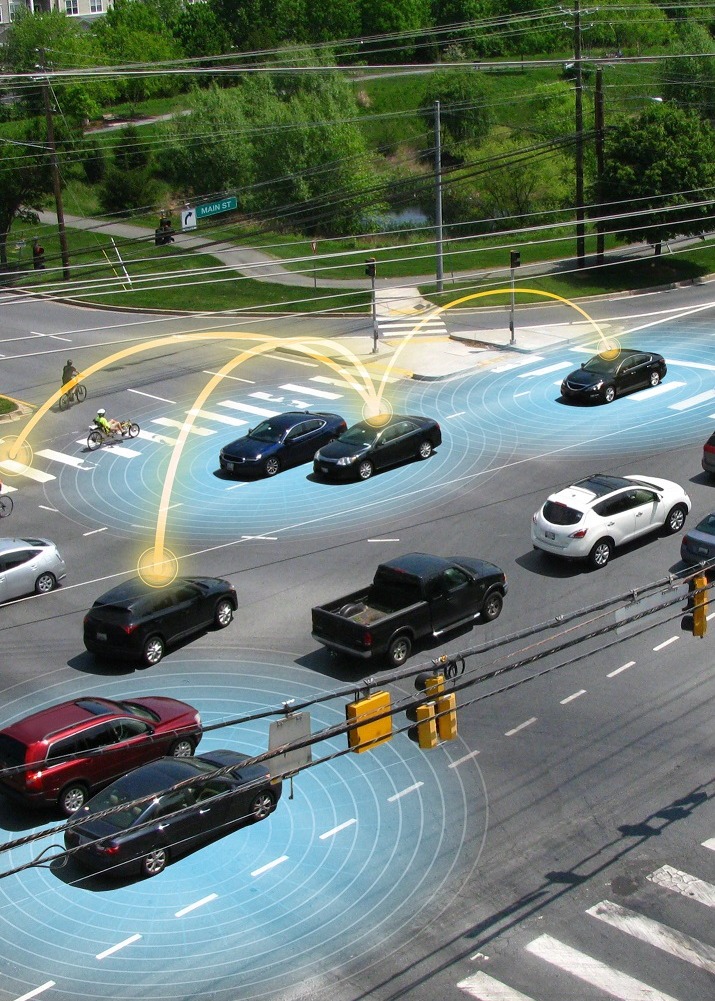
V2X technology enables vehicles to communicate with each other (V2V), other road users such as pedestrians and cyclists (V2P), and roadside infrastructure (V2I) to increase situational awareness (USDOT).
HOW IT WORKS
V2X communication between vehicles, pedestrians, and infrastructure is enabled by V2X devices that continuously exchange relative speed, position, and other data via onboard sensors or indirectly using conventional mobile network infrastructure (USDOT).
BENEFITS
V2X connectivity brings critical safety benefits as well as enhances mobility and improves efficiency through a broad range of applications, including traffic signal preemption and priority, in-vehicle warnings, work zone traveler information, and commercial vehicle alerts.
- In Connecticut, a V2X alert system deployed to protect roadside workers by giving motorists advanced warning of any hazards on the road lowered the risk of collision by 90 percent and reduced hard-braking by roadside incidents by 80 percent (2024-B01868).
- In California, a cooperative adaptive cruise control V2X deployment for freight showed that trucks could potentially reduce their fuel consumption by 5 to 6 percent and increase their average speeds by 19 percent (2024-B01868).
- In Wyoming, the Connected Vehicle Pilot Program found that over 50 percent of drivers given a V2V work zone or winter weather alert through a tablet-based human machine interface reduced their speed (2023-B01735).