 Variable Speed Limits
Download Variable Speed Limits Infographic (PDF)
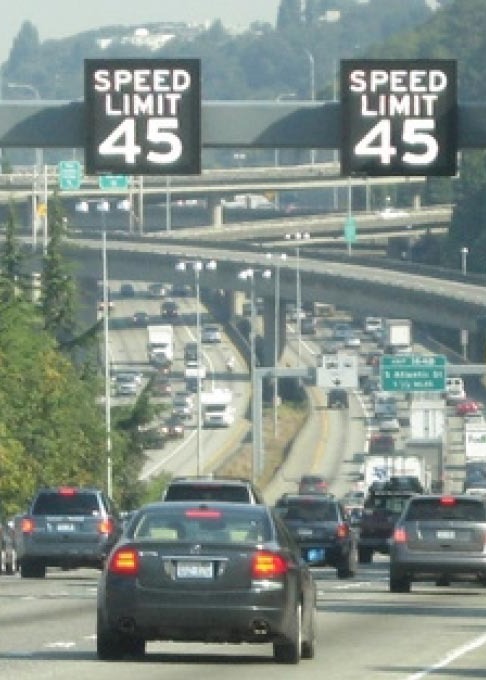
Variable speed limits (VSL) are signs that can dynamically display different speed limits depending on different factors like traffic, time of day, or weather conditions. They are primarily used for three purposes: reducing congestion, reducing speeds during inclement weather, and managing speeds during traffic events (FHWA-OPS).
HOW IT WORKS
Traffic data such as traffic volume, operating speeds, weather information, sight distance, and roadway surface are typically transmitted to a traffic management center (TMC) and analyzed automatically with an algorithm or reviewed by agency personnel who make decisions about what speed limit to display (FHWA-OPS).
BENEFITS
VSL can dynamically manage speeds during planned (rush hour congestion) and unplanned (incidents) circumstances. They can help eliminate or delay bottlenecks and mitigate the possibility of rear-end, sideswipe, and other collisions generally associated with slowed traffic on high-speed roadways (FHWA-OPS).
- In Nashville, a VSL system using an AI-based algorithm reduced traffic speed variations by nearly 33 percent. This led to improved safety with limited impacts on vehicle hours of delay (2024-B01844).
- In Virginia, a VSL system utilized a propriety algorithm that used data from traffic detectors to determine a speed limit to optimize traffic flow, which reduced fatal and serious crashes by 13 percent (2024-B01838).
- In Ohio, a VSL corridor deployment reduced crashes during snow events by 42 percent (2021-B01568).