Parking and Curb Management
Download Parking and Curb Management Infographic (PDF)
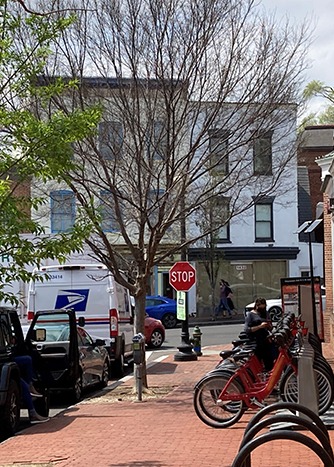
Parking and curb management is the dynamic management of parking and curb facilities to optimize performance and utilization. This includes coordination between parking facilities, traffic management systems, and transit. It also includes considerations for pedestrians, micromobility users, and transit operators (FHWA-PARK) (FHWA-CURB).
HOW IT WORKS
Parking and curb management strategies are used to monitor and manage parking and curb facilities to help maximize transportation infrastructure investments, reduce congestion, improve safety, and optimize curb productivity. This could be accomplished by using pricing strategies, phone applications for reservations, charging stations, and more.
BENEFITS
Effective parking and curb management improves parking capacity, decreases time spent searching for parking, and reduces congestion.
- In Los Angeles, a demand-based pricing strategy as part of the city’s parking management system led to a 37 percent reduction in parking duration downtown (2024-B01821).
- In Washington, DC, a curbside delivery reservation system decreased double parking and illegal U-turns by 64 percent (2019-B01420).
- In Maryland, automated parking technology allowed vehicles to park as close as 10 centimeters to adjacent cars, leading to a possible 20 percent expansion in parking capacity (2022-B01639).